

Ketamine Assisted Therapy
Modern Science Meets Tradition

Our Approach to Ketamine assisted Therapy
Ketamine Assisted Therapy is a powerful modality to help heal trauma stored in the body. I am trained in somatic experiencing, and I work with a team of trauma trained psychiatrists and somatic trauma therapists to provide a ketamine assisted therapy experience that blends tradition, modern medicine and the most effective trauma therapy modalities. I trained and practiced KAP for several years before coming into space with my colleague Lillie Cortes LPC, SEP who was aligned with the synergy of bringing KAP and trauma therapy together. We started Trauma Healing Journeys and have been advocating for safe, effective ketamine therapy with the proper pairing of trauma therapy work and trauma informed psychiatric care. Meet our team
Somatic Experiencing (SE) and Ketamine-Assisted Therapy (KAT) can be complementary modalities that together enhance therapeutic outcomes by addressing different but interrelated dimensions of trauma and dysregulation.
Nervous system regulation: SE focuses on resolving trauma-related dysregulation through bodily awareness, titration, pendulation, and completion of defensive responses. Ketamine, administered at subanesthetic doses, can create a transiently relaxed cognitive and affective state that reduces avoidance and defensive hyperarousal, making it easier for patients to access and process somatic sensations without becoming overwhelmed.
Window of tolerance expansion: Ketamine’s acute psychophysiological effects often widen a patient’s “window of tolerance,” allowing them to tolerate previously intolerable sensations, memories, and emotions. SE interventions delivered within this expanded window can guide patients to safely track, orient to, and modulate bodily activation, supporting integration of new regulation skills into the nervous system.
Facilitation of interoceptive access: Ketamine can alter habitual cognitive and defensive patterns that block interoceptive awareness. SE’s emphasis on gentle attention to internal sensations leverages this increased access to bodily experience, helping patients to develop clearer, differentiated interoceptive maps that underlie emotional regulation and somatic self-protection.
Integration and embodiment of insights: Psychological insights during ketamine sessions can remain cognitive or fleeting without embodied integration. SE provides structured somatic practices that translate cognitive and emotional breakthroughs into felt, embodied changes—reinforcing new neural and bodily patterns and reducing the likelihood of relapse into old defensive responses.
Trauma memory processing without retraumatization: SE’s titrated approach minimizes retraumatization by working at a manageable somatic level. When combined with ketamine’s capacity to decrease rigid threat response patterns, clinicians can more safely support trauma processing, allowing for incremental resolution of somatic constriction, freezing, or chronic hyperarousal.
Enhancing therapeutic alliance and safety: SE techniques help clinicians attune to clients’ nonverbal signals and pacing, which is particularly important during altered states induced by ketamine. This attunement fosters safety, containment, and trust, optimizing the therapeutic context for both experiential work and integration.
Incorporation of SE with KAP-
Timing and sequencing: SE-informed preparatory work (grounding, orienting, resourcing) before ketamine sessions and somatic integration work afterward can maximize benefit. We also incorporate brief in-session SE interventions during the ketamine experience to help you move through difficult experiences.
Training and scope: All of our providers are trained or are in the process of training with ketamine therapy and somatic experiencing. This ensures safe, effective delivery of the most effective ketamine assisted therapy. Clear consent, ongoing monitoring of physiological and psychological responses, and contingency planning for distress are essential.
Individualized approach: Not every patient will benefit from combining SE and KAT. Clinical assessment should guide whether the synergy is appropriate, considering factors such as trauma history, dissociation, cardiovascular health, and current stability. Everyone is treated as an individual. We do not follow any set amount of sessions, protocols or plans. You and your clinician will evaluate and decide how to proceed through the process.
Why do we blend SE and Ketamine assisted therapy? Somatic Experiencing and Ketamine-Assisted Therapy can act synergistically: ketamine can open access to somatic experience and widen tolerability, while SE provides the somatic framework to process, integrate, and consolidate changes at the level of the nervous system and body. When delivered by trained clinicians within a trauma-informed, safety-focused model, their combination can enhance regulation, embodiment of insights, and durable therapeutic gains.
Our approach is to foster your ability for self-healing and curiosity. I believe much of the healing process draws on your ability to tap into your inner healing self. We create the space and setting necessary to do so.
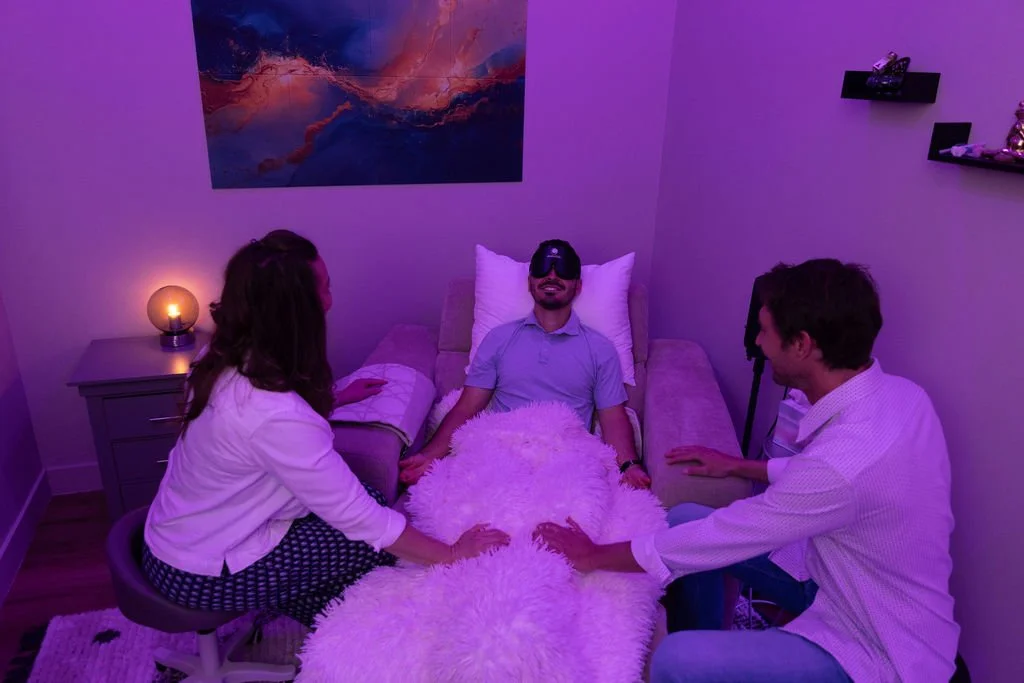
Preparation involves both medical and therapeutic aspects designed to support your nervous system and help you move into a therapeutic ketamine experience safely and effectively.
Intake: In the first session we map your current nervous system state. This is a medical and psychological intake where we review your health history, medications, stress responses, and any factors that affect autonomic balance (fight/flight, freeze, or calm states). This assessment tells us how your brain and body are likely to respond to ketamine and guides dosing, environment, and safety measures.
Experiential preparation: The next two sessions are practice runs for how to regulate and orient your nervous system before, during, and after a ketamine session. You learn concrete skills to shift from hyperarousal or shutdown into a curious, receptive state—breathing rhythms, grounding cues, interoceptive awareness (tuning into bodily signals), and simple mental anchors. We also rehearse what the session might feel like: typical changes in perception, emotional activation, and nervous system shifts so these sensations become predictable rather than alarming.
Personalization and safety: We design the preparation to match your nervous system profile. That means tailoring pacing, language, sensory set (lighting, sound), and the support plan so your parasympathetic system (the “rest-and-digest” side) can engage when helpful, or so we can contain sympathetic activation (fight/flight) if it arises. The emphasis is on creating a reliable safety scaffold so you feel supported while exploring deeper experiences.
Therapeutic aim: The point of preparation is to build nervous system confidence—learning to recognize signals, self-soothe, and stay curious rather than reactive—so you can access the therapeutic benefits of ketamine more fully. We cultivate rapport, trust, and a collaborative approach: you bring your lived experience, and I provide guidance and structure. Together we form a team focused on regulation, exploration, and maximizing the healing potential of your session.
Preparation
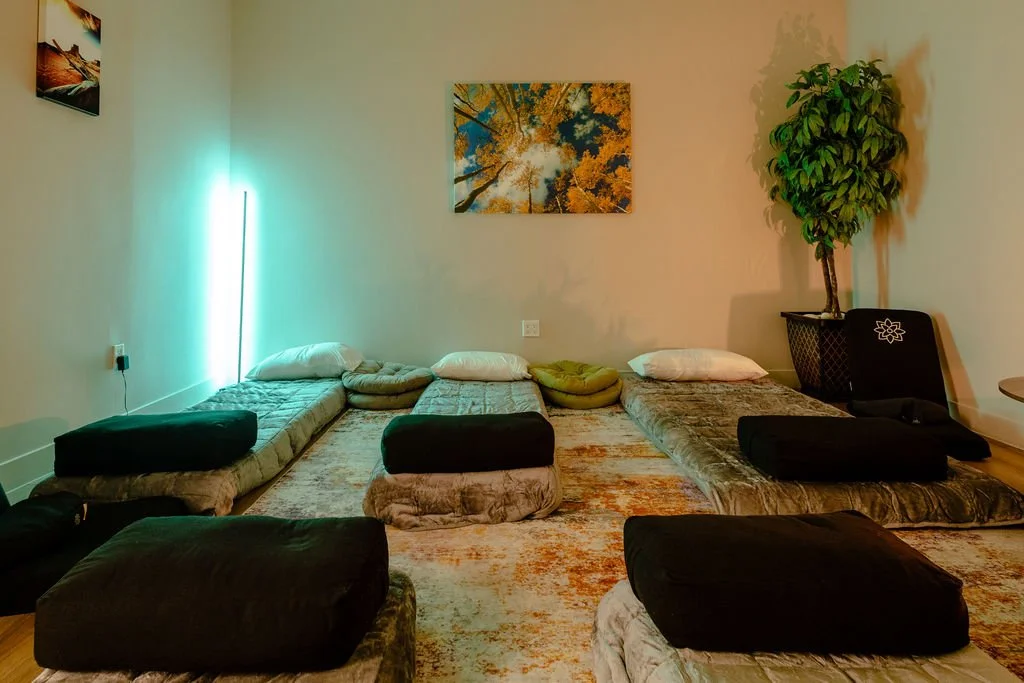
The Ketamine Experience
The ketamine experience is deeply shaped by how we prepare the nervous system — both through mindset and through setting. Preparing your nervous system increases safety, deepens therapeutic benefit, and helps you integrate lasting change. Read more on how we offer your ketamine therapy experience.
Mindset: preparing the body and mind
Physical readiness: In the two weeks before a session we emphasize consistent sleep, balanced nutrition, and moderate exercise. These practices regulate autonomic tone, reduce baseline stress, and make the brain and body more receptive to the medicine. Being well-rested and well-nourished supports clearer processing and reduces the risk of fatigue or physical discomfort during the session.
Emotional readiness and confidence: Mindset includes feeling secure and confident about the process. We build a collaborative therapeutic relationship so you know you are not alone — you are part of a team. This sense of safety and connection down-regulates threat systems in the brain (amygdala/brainstem reactivity) and allows higher-order networks to participate in new learning.
Relaxation and preparedness: Arriving in a relaxed state — having completed practical preparations and cleared expectations — helps the parasympathetic nervous system settle you into the experience.
Each session is 2 hours long. Fully supported by one of our trained trauma therapists. There will be talking, times of deeper introspection and processing material that arises organically through the session. Each therapist is there to be highly attuned to your needs as a human. Nothing that arises is too much! We believe the value of having a trained trauma therapist in the room at all times is to hold the space for everything and anything to arise. You can feel confident they have the ability to handle whatever comes up. That is why we practice this way.
Even when not talking, having someone caring for you and being attuned to your needs provides a valuable opportunity for attachment wound repair. Having your nervous system feel safe and connected is a crucial part of the experience.
Our therapists will take notes of what comes up while also hand picking a playlist that is just right for you based on the intention set.
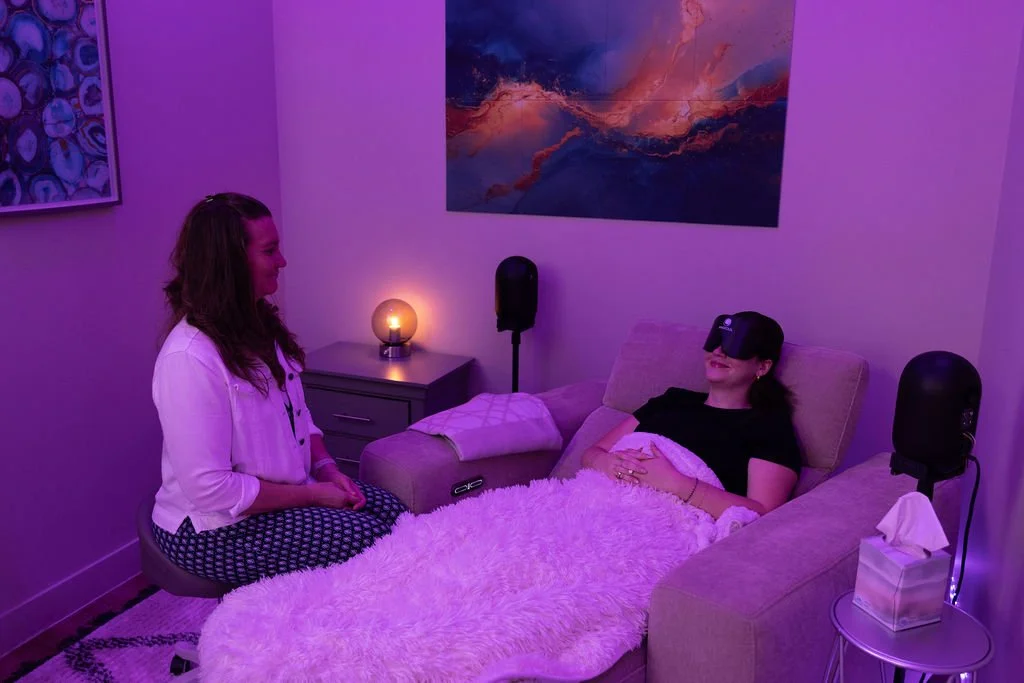
Integration of the Experience
Integration of the ketamine experience occurs in distinct phases that engage the nervous system and use somatic experiencing techniques to support processing and change.
Phase 1 — immediate post-session:
In the minutes and hours after your ketamine session your nervous system may be in an aroused, activated, or softened state. We will invite you to describe the imagery, thoughts, and sensations you experienced under the medicine using grounding, tracking, and gentle resourcing. A somatic approach means we pay attention to bodily signals—breath patterns, muscle tone, urges to move, shifts in temperature, and localized sensations—and help you follow them safely. This may facilitate discharge of frozen or held stress responses (e.g., shaking, trembling, release of breath) and allow trauma-related activation to complete rather than remain stuck. You may notice new impulses (to move, to cry, to vocalize), shifts in autonomic tone (calming of the sympathetic fight/flight response or activation of the parasympathetic rest-and-digest system), and fresh emotional clarity. We help you make sense of these changes by reflecting them back, offering neurophysiological framing (what it might mean for your nervous system), and teaching easy somatic tools to regulate arousal (paced breathing, orienting, grounding anchors).
Phase 2 — the following 1–2 weeks:
After ketamine, the brain often enters a period of increased neural plasticity and openness. In somatic terms, the window for reorganization of embodied patterns widens: interoceptive awareness (the felt sense of internal states), affect tolerance, and flexibility in autonomic responses can be enhanced. You’ll have an integration session with a therapist within a few days of your KAP session to capitalize on this receptive window. In that session we will help you track ongoing somatic sensations, map shifts in nervous system state across contexts, and practice interventions that support consolidation of adaptive patterns—such as titrated exposure to sensations, resourcing, and renegotiating motor impulses. We will also translate insights into concrete behavioral experiments you can try in daily life to reinforce new neural pathways and regulatory habits.
Practical supports and personalized recommendations:
Session notes and playlist: We will provide the notes from your session and the playlist used so you can revisit the experience safely. Revisiting can cue embodied memories and allow gentle reintegration when you’re regulated.
Tailored activities: Recommendations will be individualized to the depth of the work. For some, expressive outlets (art, journaling, movement) act as somatic outlets that help integrate feelings into the body and narrative. For others, the primary aim may be to develop interoceptive skills—learning to notice, name, and tolerate bodily sensations and affect without being overwhelmed.
Home somatic practices: Simple practices we may suggest include: paced diaphragmatic breathing to downregulate sympathetic arousal; short movement or discharge practices.